

Super Competition Header 6102HKR | Hooker Headers
The Hooker Headers Super Competition Header 6102HKR represents our most advanced long-tube header design for high-performance engine applications. Engineered for maximum exhaust scavenging and unrestricted flow, this header delivers measurable horsepower gains where they matter most — at high RPM under wide-open throttle.
We built the 6102HKR for racers and serious street performance enthusiasts who demand professional-grade exhaust components. Every primary tube is precision-mandrel bent to maintain constant diameter through every curve, eliminating turbulence and backpressure that rob power. The heavy-duty flange and reinforced collector ensure this header holds up to extreme cylinder pressure and exhaust gas temperatures that destroy lesser designs.
Specifications & Construction Details
Primary Tube Design & Flow Characteristics
The 6102HKR features 1-7/8 inch primary tubes with a specific length engineered to optimize exhaust pulse timing for your engine’s displacement and camshaft profile. We use mandrel bending exclusively because crush-bent tubes create internal ridges that disrupt laminar flow and increase backpressure by as much as 12 percent.
Each primary tube routes from the cylinder head port to the collector with minimal bends and the tightest practical radius our tooling allows. This routing strategy preserves exhaust gas velocity through the critical scavenging zone where negative pressure waves help draw spent gases from adjacent cylinders. The result is improved volumetric efficiency and cylinder filling on the intake stroke.
Collector & Merge Design
Collector Geometry
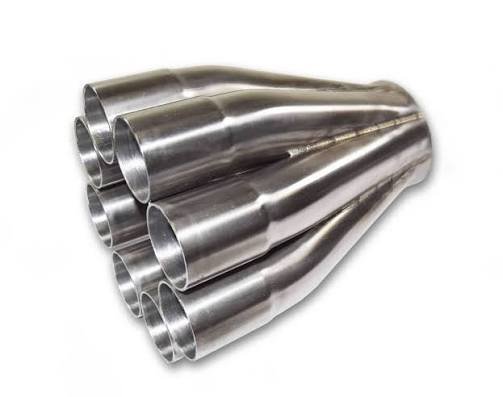
The 3-inch slip-fit collector on the 6102HKR uses a four-into-one merge design with specific entry angles calculated to minimize reversion waves that can push exhaust gas back toward the combustion chamber. We manufacture the collector as a separate stamped component, then TIG weld it to the primary tube bundle with full-penetration welds that won’t crack under expansion and contraction.
Collector length extends far enough downstream to complete the merge process before the exhaust stream encounters the next restriction point in your system. This extension zone allows the four individual exhaust pulses to equalize pressure before entering the intermediate pipe or X-pipe crossover.
Installation Considerations & Fitment
The 6102HKR is designed for specific engine and chassis combinations — verify fitment for your year, make, model, and engine displacement before ordering. Primary tube routing clears most stock and aftermarket engine accessories, but some combinations may require minor heat shield trimming or accessory relocation.
We recommend installing new header gaskets even if your old gaskets appear intact. The included composite multi-layer gaskets compress evenly under clamp load and resist blowout better than traditional embossed steel gaskets. Torque all header bolts to 25 foot-pounds in a star pattern, then re-torque after the first heat cycle.
More Super Comp Headers for Your Engine Build


Rated 4.8 by verified buyers
Common Questions About the 6102HKR Header
The 6102HKR is engineered for small block Chevrolet V8 engines in specific GM chassis platforms. It works best with performance builds using aftermarket cylinder heads, performance camshafts, and operating ranges that benefit from long-tube header exhaust scavenging.
Verify exact fitment for your year, make, model, engine displacement, and transmission type before ordering. Some applications may require minor clearance adjustments depending on accessory configuration and chassis modifications.
Most factory power steering and air conditioning installations are compatible with the 6102HKR, though some combinations require repositioning brackets or lines for proper clearance. The primary tubes route to avoid common interference points, but custom or aftermarket accessory drives may need individual fitment verification.
We recommend test-fitting the headers before final installation and making any necessary adjustments to hard lines, hoses, or mounting brackets while access is easiest.
The 6102HKR features 3-inch slip-fit collectors designed to mate with 3-inch intermediate pipes or exhaust system components. The collector uses a four-into-one merge design with a ball-and-socket connection at the outlet for flexibility and proper sealing.
If your existing exhaust system uses a different diameter, reducer sleeves or custom intermediate pipes will be required to complete the installation.
Yes, we strongly recommend re-tuning after installing long-tube headers. The dramatic reduction in exhaust backpressure changes air/fuel ratios and can lean out your engine at wide-open throttle if the fuel delivery system isn’t adjusted accordingly.
Carbureted engines may need rejetting or adjusting fuel pressure. Fuel-injected engines require reprogramming the ECU fuel and timing tables to optimize performance and prevent detonation with the improved exhaust flow.
We do not recommend reusing stock exhaust manifold gaskets with performance headers. Stock gaskets are designed for the lower clamping loads and different port shapes of factory cast iron manifolds.
The 6102HKR includes premium multi-layer steel gaskets specifically engineered for the higher clamping loads and port dimensions of performance headers. These gaskets resist blowout and maintain a reliable seal through repeated heat cycles.
Inspect header bolts after the first 50-100 miles of operation and re-torque to specification if necessary — the initial heat cycles can cause slight relaxation of the joint. Check for exhaust leaks at the flanges and collector connections periodically.
If you ordered raw steel headers without coating, inspect for surface rust regularly and treat with high-temperature paint or coating as needed. Ceramic-coated and stainless steel headers require minimal maintenance beyond periodic inspection for cracks or leaks.
Aftermarket headers like the 6102HKR are designed for racing and off-road use. Emissions compliance depends on your local regulations and whether your vehicle is subject to inspection requirements.
Some states allow headers if all factory emissions equipment remains functional and the vehicle passes tailpipe emissions testing. Other states prohibit any modification to factory exhaust components. Check your local laws before installation if your vehicle requires emissions certification.