


Hooker Block Hugger Headers 2312HKR | High-Performance Exhaust Headers
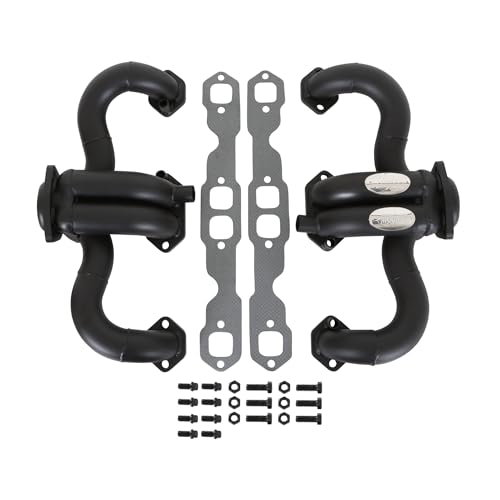
Our Hooker Block Hugger Headers 2312HKR are engineered for GM small block applications where chassis clearance is at a premium. The compact design hugs the engine block closely, providing unrestricted exhaust flow without interfering with steering components, frame rails, or suspension geometry.
We've constructed these headers from heavy-gauge steel with precision mandrel-bent primary tubes that maintain consistent diameter throughout every bend. Each collector is TIG-welded to ensure leak-free operation under extreme thermal cycling. The 2312HKR configuration delivers proven horsepower and torque gains across the RPM range while maintaining ground clearance for street-driven vehicles.
Whether you're building a classic muscle car or upgrading a street rod, these block hugger headers offer the exhaust efficiency you need without the installation headaches associated with full-length tube headers. Our design team optimized every tube route to work within the constraints of stock chassis dimensions.
2312HKR specifications at a glance
Materials and construction quality
We manufacture the Hooker block hugger headers 2312HKR from heavy-gauge steel selected for its thermal resistance and structural integrity. Each primary tube is mandrel-bent rather than crush-bent, which maintains the full internal diameter through every curve and elbow. This manufacturing precision prevents flow restrictions that rob power.
Every collector junction receives TIG welding rather than MIG, creating stronger joints that withstand the repeated thermal expansion cycles exhaust components endure. The welds are ground smooth on premium-grade units to eliminate turbulence at merge points. We apply a high-temperature coating as standard equipment to manage radiant heat and protect the steel from corrosion.
Fitment specifications for GM small block engines
The 2312HKR configuration is engineered specifically for GM small block V8 engines in applications where frame rails, steering linkage, or suspension components limit header tube routing options. We’ve optimized the primary tube length and collector positioning to work within these constraints while still delivering measurable performance gains.
These headers clear most factory and aftermarket steering components without requiring cutting or modification. The block-hugger design keeps all tubes tucked close to the engine, which is critical in vehicles with limited engine bay width. Ground clearance remains adequate for street use, though we recommend measuring your specific chassis if you’ve lowered the suspension more than two inches.
Performance characteristics and tuning considerations
Power gains across the RPM range
The Hooker block hugger headers 2312HKR typically add between 15 and 25 horsepower to a stock GM small block, with torque gains concentrated in the mid-range where street engines spend most of their operating time. Peak gains occur between 3,500 and 5,500 RPM, making these headers ideal for street performance rather than dedicated race applications.
Exhaust scavenging improves significantly over factory cast-iron manifolds. The equal-length primary tubes and properly sized collectors create negative pressure pulses that help evacuate cylinders during valve overlap. This effect becomes more pronounced as engine speed increases, though the compact tube routing means these headers won’t match the peak horsepower potential of full-length racing headers.
Performance headers for your GM build



Rated 4.8 by verified buyers


Common questions about the 2312HKR headers
The 2312HKR headers are designed for GM small block V8 engines in chassis configurations where standard long-tube headers create clearance conflicts with frame rails, steering components, or suspension geometry. We provide detailed fitment charts that specify compatible vehicle years, body styles, and engine configurations.
Before ordering, verify your vehicle's chassis hasn't been modified in ways that might affect header clearance. Aftermarket steering components, engine mounts, or suspension alterations can impact fitment even in listed-compatible applications. Measuring your engine bay dimensions and comparing them to our technical specifications will confirm compatibility for modified vehicles.
Most GM small block engines gain between 15 and 25 horsepower when upgrading from stock cast-iron exhaust manifolds to the 2312HKR block hugger headers. Torque improvements are typically concentrated in the 3,500 to 5,500 RPM range, which benefits street performance and daily driving characteristics.
Actual power gains depend on your engine's existing modifications, compression ratio, camshaft profile, and intake system. A bone-stock engine will see more dramatic improvements than one that's already been modified with a performance intake and carburetor. The compact tube routing of block hugger headers prioritizes fitment over absolute maximum flow, so peak horsepower numbers will be lower than what full-length racing headers can achieve.
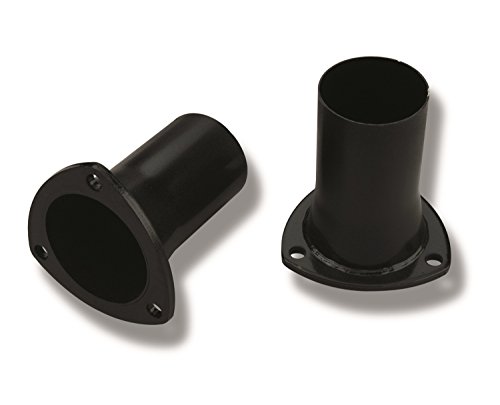
The 2312HKR headers use 3-inch collector outlets that require connection to your exhaust system's intermediate pipes or catalytic converters. Most stock GM exhaust systems use smaller diameter piping, so you'll likely need adapter reducers or a complete exhaust system upgrade to properly mate with the header collectors.
We recommend having a professional exhaust shop evaluate your existing system and fabricate proper connections that maintain smooth flow transitions. Simply reducing the 3-inch collectors down to 2-inch exhaust pipe creates a bottleneck that limits the headers' performance potential. A complete 2.5-inch or 3-inch exhaust system maximizes the power gains these headers can deliver.
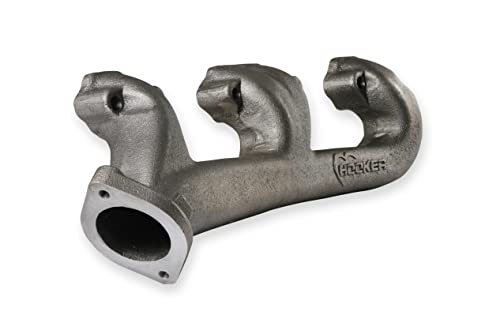
Block hugger headers feature shorter primary tubes with tighter bends that keep all exhaust routing close to the engine block. This compact design prioritizes chassis clearance over absolute exhaust flow, making them ideal for vehicles where frame rails, steering components, or ground clearance prevent installation of full-length headers.
Long-tube headers use longer primary tubes with gentler bends that optimize exhaust scavenging and flow velocity. They typically produce more peak horsepower but require more space and often interfere with chassis components. The Hooker block hugger headers 2312HKR sacrifice some peak power potential in exchange for reliable fitment in tight engine bays and street-friendly ground clearance.
Installation of the 2312HKR headers is straightforward for mechanically inclined individuals with basic hand tools and a safe way to elevate the vehicle. The process involves removing the old exhaust manifolds, cleaning the cylinder head surfaces, installing new gaskets, and bolting the headers in place using the factory mounting points.
You'll need a complete socket set, combination wrenches, a torque wrench, and jack stands rated for your vehicle's weight. Most installations take between three and six hours depending on your experience level and how accessible the exhaust bolts are. Working from underneath the vehicle is necessary for some bolt access, so proper safety equipment is essential. If you're uncomfortable working under a raised vehicle or lack the proper tools, professional installation is the safer choice.
The 2312HKR headers themselves don't contain catalytic converters, so emissions compliance depends on how you configure the rest of your exhaust system. If your state requires catalytic converters, you'll need to install high-flow catalytic converters downstream of the header collectors.
Many states have specific regulations about aftermarket exhaust modifications, and some require that any replacement parts carry specific certifications. We recommend checking your state's vehicle emissions regulations before purchasing headers. In states with strict emissions testing, you may need to retain your factory catalytic converters and have them welded to the header collector outlets to maintain compliance.
Header bolts experience significant thermal cycling that can cause them to loosen during the first few hundred miles of operation. We recommend re-torquing all header bolts to specification after the first 50-100 miles, then again at 500 miles. This allows the gaskets to properly seat and compress under operating temperatures.
Using high-quality multi-layer steel gaskets and applying anti-seize compound to bolt threads during initial installation helps maintain proper clamping force. Some installers prefer to use header bolt locking devices or safety wire on the bolts, though this is typically unnecessary if you follow the proper re-torque schedule. Once the headers have completed their initial thermal cycles and the gaskets have fully seated, bolt loosening rarely occurs during normal operation.