


Hooker Competition Long Tube Headers 2451-1HKR
We engineered the Hooker Competition Long Tube Headers 2451-1HKR for racers who demand maximum exhaust flow and repeatable horsepower gains. These headers feature mandrel-bent 1⅞-inch primary tubing that maintains consistent diameter through every bend, eliminating the flow restrictions found in crush-bent designs.
Built from 16-gauge 304 stainless steel, the 2451-1HKR delivers the corrosion resistance and heat cycling durability that competition environments require. The 3½-inch slip-fit collector design allows for quick turbine or merge collector swaps between events without cutting or welding. Our CNC-machined flanges seal directly to GM small-block cylinder heads with no gasket distortion or leak paths, even under extreme thermal cycling.
What makes these headers race-ready
Primary tube diameter and collector design
The 1⅞-inch primary tube diameter strikes the balance between mid-range torque retention and top-end flow capacity that bracket racers and road course competitors need. Smaller primaries would choke peak horsepower; larger tubes sacrifice the exhaust gas velocity required for effective cylinder scavenging below 6,000 RPM.
Our slip-fit collector system uses a 3½-inch ID that accommodates both bolt-on merge collectors and turbocharger V-band flanges. The collector extends far enough from the engine bay to provide clearance for most wastegate configurations without requiring custom fabrication. Each tube terminates with a CNC-machined edge that seats cleanly inside the collector sleeve, eliminating the gap leaks common with hand-cut tube ends.
Material and heat management
We chose 16-gauge 304 stainless steel because it maintains structural integrity through the thermal cycling that destroys thinner materials in competition use. The wall thickness resists crack propagation at weld joints even when headers are removed and reinstalled multiple times per season.
The stainless alloy’s chromium content forms a passive oxide layer that prevents rust in humid paddock environments and resists the acidic condensation that forms during warm-up cycles. Unlike mild steel headers that require ceramic coating to survive, the 2451-1HKR needs no additional surface treatment to deliver multi-season durability. The natural heat retention of stainless steel also helps maintain exhaust gas temperature for improved turbine spool on forced-induction applications.
Flange machining and gasket compatibility
Each header flange is CNC-machined from ½-inch plate with bolt hole locations held to ±0.005-inch tolerance. This precision ensures that all eight exhaust ports align simultaneously when the flange is torqued to spec, distributing clamping load evenly across the gasket surface.
The flange face receives a 32-microinch surface finish that seals effectively with standard Fel-Pro or Cometic exhaust gaskets without requiring sealant. We radiused the port entries to match the gasket’s inner diameter, creating a smooth transition from the cylinder head port to the primary tube. This eliminates the sharp edge that would create a reversion point and disturb exhaust pulse timing. The same tube routing used in the 2452-1HKR variant ensures consistent fitment across our competition header lineup.
More competition headers for GM applications
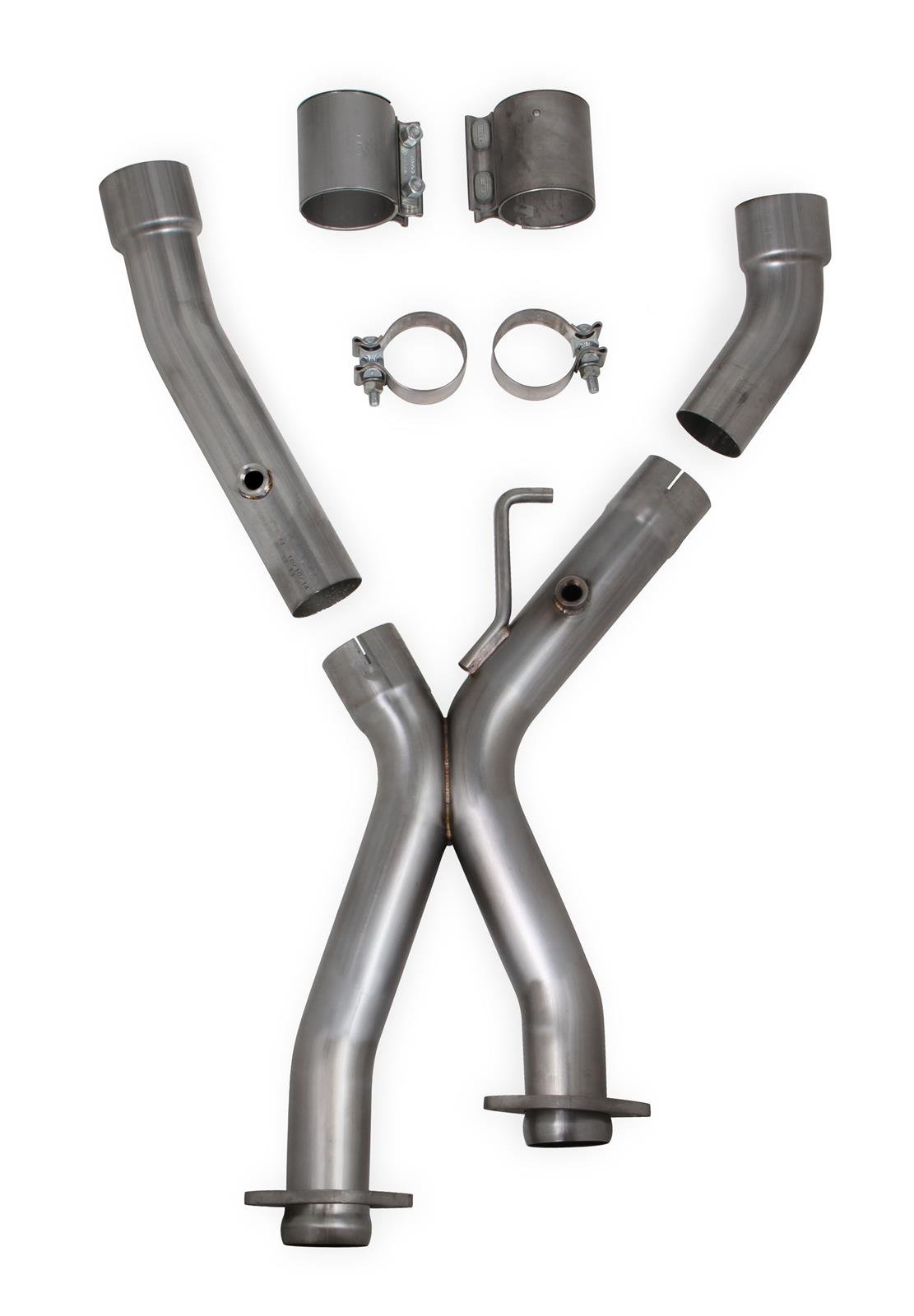


Rated 4.8 by verified buyers
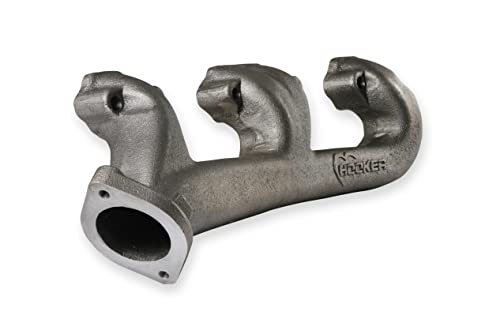


Questions about the 2451-1HKR headers
The 2451-1HKR is engineered for GM small-block V8 engines including 265, 283, 302, 305, 327, 350, and 400 cubic-inch displacements. The flange bolt pattern matches standard GM cylinder head exhaust port spacing used from 1955 through current aftermarket performance heads.
These headers require a competition chassis or heavily modified street car with relocated or removed accessories. They do not fit vehicles with factory power steering, air conditioning, or stock suspension geometry. Verify collector clearance and steering rack interference before ordering if you're running a lowered chassis or non-standard engine mounts.
These are competition headers designed for off-road racing use only. They do not include provisions for oxygen sensors, catalytic converters, or any emissions control equipment required for street-legal vehicles.
The slip-fit collector design allows you to add custom sensor bungs if your racing class requires lambda monitoring for data acquisition. However, the primary tube length and collector design are optimized for maximum flow rather than emissions compliance. Check your local racing sanctioning body's rules before installation.
With the standard 3½-inch slip-fit collectors installed, ground clearance measures approximately 4½ inches on a chassis at stock ride height. Lowered vehicles or cars with modified suspension geometry may see 3 to 3½ inches of clearance depending on frame rail height.
If you're running a road race car with aggressive suspension settings, you may need to add collector extensions or raised merge collectors to prevent contact with track surface irregularities. The collector outlet is positioned to clear most transmission crossmember designs but verify fitment on custom chassis applications.
No external coating is required. The 16-gauge 304 stainless steel construction provides corrosion resistance and heat management without supplemental treatment. The material's natural oxide layer prevents rust formation even in humid environments.
Some racers choose to add thermal barrier coating to reduce underhood temperatures in forced-induction applications, but it's not necessary for header longevity. If you do apply coating, ensure the flange sealing surfaces remain uncoated to maintain proper gasket compression and prevent leaks.
The collectors attach using heavy-duty band clamps that encircle the slip joint between the header outlet tubes and the collector inlet. Each primary tube terminates with a precision-machined edge that inserts approximately 1½ inches into the collector sleeve.
Proper installation requires cleaning both surfaces with a wire brush, applying high-temperature anti-seize compound, and torquing the band clamp to the manufacturer's specification. The combination of mechanical clamping force and thermal expansion creates a gas-tight seal that withstands exhaust pressure pulses and vibration throughout a race event.
Torque the header flange bolts to 25 foot-pounds in a cross-pattern sequence. Start with the center bolts and work outward to ensure even gasket compression across the entire sealing surface.
Apply a thin coat of high-temperature anti-seize compound to the bolt threads before installation. Recheck torque after the first heat cycle when the headers have fully expanded and contracted. Most racers find that retorquing after three competition sessions prevents gradual loosening from thermal cycling and vibration.
The primary tube routing clears most aftermarket racing oil pans with sump depths up to 7 inches. Stock GM oil pans typically provide adequate clearance in vehicles with unmodified engine mounts and crossmember positions.
Deep-sump road race pans with 8-inch or greater depths may require chassis modifications or repositioned engine mounts to prevent tube contact during suspension compression. Dry-sump systems with shallow pans provide the most installation clearance. Mock up the headers with your specific oil pan before final installation to verify adequate clearance under all suspension travel conditions.