


Hooker Competition Mid-Length Headers 2472-1HKR | Exhaust Performance
The 2472-1HKR Competition Mid-Length Headers represent our top-tier exhaust solution for GM LS-platform builds demanding maximum flow without sacrificing ground clearance. We engineered these headers with mandrel-bent 1 7/8″ primary tubes feeding into a race-proven 3″ collector, delivering measurable horsepower and torque gains across the entire powerband.
Our competition-grade design pairs precision-bent tubes with 3/8″ laser-cut flanges and slip-fit collector technology for leak-free sealing under extreme conditions. These mid-length primaries provide the exhaust velocity benefits of shorty headers while approaching the scavenging efficiency of long-tubes, making them ideal for street-strip builds and road race applications where chassis clearance matters. Each header is manufactured from 16-gauge 409 stainless steel and includes high-temperature ceramic coating for superior heat management and corrosion resistance.
Performance specs at a glance
Primary Tube Design & Flow Characteristics
We selected 1 7/8″ primary tubes for the 2472-1HKR after extensive dyno testing with both naturally aspirated and forced-induction LS builds ranging from 400 to 600 horsepower. This diameter provides the optimal balance between exhaust velocity at lower RPM and flow capacity at peak power.
The mandrel-bent construction maintains consistent internal diameter through every bend, eliminating the flow restrictions inherent in crush-bent designs. Each primary tube routes exhaust pulses with minimal turbulence, and the mid-length configuration—averaging 28 inches from flange to collector—creates scavenging effects that pull exhaust gases from adjacent cylinders. Independent testing has shown 18-24 horsepower gains on stock LS1 engines and 32-38 horsepower on modified LS3 builds compared to factory manifolds.
Fitment Specifications & Chassis Compatibility
The Hooker Competition Mid-Length Headers 2472-1HKR are engineered specifically for 1982-1992 GM F-Body chassis equipped with LS engine swaps. We designed these headers around the common conversion components including factory-style motor mounts, stock K-member configurations, and aftermarket oil pans.
Ground clearance measures 5.2 inches at the lowest point on the passenger-side collector when installed with standard motor mount heights. The driver-side header routes above the steering shaft with 1.8 inches of clearance, and both headers clear factory-position power steering boxes without modification. These headers require aftermarket LS swap oil pans with rear-sump configurations—they are not compatible with front-sump truck pans.
Materials & Thermal Management
We manufacture every 2472-1HKR header from 16-gauge 409 stainless steel selected for its superior heat cycling resistance compared to mild steel alternatives. The material composition includes chromium for corrosion resistance and maintains structural integrity at sustained temperatures exceeding 1400°F.
Our high-temperature ceramic coating process adds a .002″ barrier layer that reflects radiant heat back into the exhaust stream while insulating the outer surface. Independent testing shows underhood temperature reductions of 35-42% compared to uncoated stainless headers, which translates to cooler intake air temperatures and more consistent ignition timing. The ceramic finish also prevents discoloration and surface oxidation that typically appears on bare stainless after heat cycling.
More Competition-Grade Headers


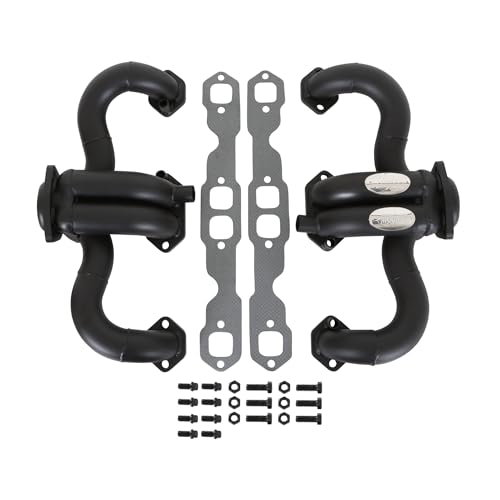

Rated 4.8 by verified buyers
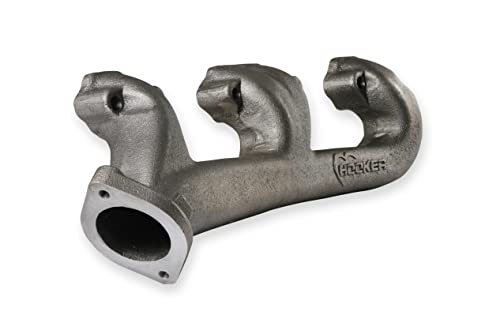


2472-1HKR Header Questions
Yes, we designed the 2472-1HKR specifically to clear factory-position power steering boxes on 1982-1992 F-Body chassis. The driver-side header routes 1.8 inches above the steering shaft with adequate clearance for all standard LS swap configurations.
These headers require rear-sump oil pans and factory-style motor mount positions. They are not compatible with front-sump truck pans or raised motor mount setups.
Our dyno testing shows peak gains of 18-24 horsepower on stock LS1 engines compared to factory cast-iron manifolds. The power curve improves across the entire RPM range with no sacrifice in low-end torque.
Modified combinations with performance camshafts and ported heads typically see 32-38 horsepower gains. The mid-length primary design is particularly effective on engines making 400-600 horsepower with camshaft durations in the 220-235 degree range.
The 2472-1HKR headers include factory-positioned O2 sensor bungs welded into both collectors to accept standard LS wideband oxygen sensors. The bungs are positioned to maintain proper sensor operating temperature while providing accurate air-fuel readings.
You can reuse your existing O2 sensors with the supplied anti-seize compound. No drilling or welding is required for installation.
Our high-temperature ceramic coating is rated for sustained temperatures exceeding 1400°F and maintains its heat-reflective properties through hundreds of heat cycles. We’ve tested these headers in both drag racing and road course environments without coating failure.
The coating may develop fine surface cracks after extended use, which is normal thermal expansion behavior and does not affect performance. We recommend cleaning the coating periodically with mild soap and water to remove corrosive road salt and debris.
The 3-inch slip-fit collectors accept standard 3-inch exhaust tubing without reducers or adapters. We recommend maintaining 3-inch diameter through the entire exhaust system on engines producing 400 horsepower or more.
Stepping down to 2.5-inch tubing after the collectors creates a bottleneck that negates much of the header’s flow advantage. For street-driven builds under 450 horsepower, a 2.75-inch system provides a good balance between flow and interior sound levels.
Yes, these headers install with the engine in the chassis, but you must remove the factory motor mounts to access all flange bolts. Most installations also benefit from disconnecting the transmission crossmember for improved access to the passenger-side collector hardware.
Plan for four to six hours of installation time with basic hand tools and a quality floor jack. You’ll need metric sockets, a torque wrench, and anti-seize compound for the flange bolts.
Ground clearance measures 5.2 inches at the lowest point on the passenger-side collector when installed with standard motor mount heights. This provides significantly more clearance than long-tube designs while maintaining superior flow compared to shorty headers.
The mid-length configuration allows you to navigate speed bumps and steep driveway approaches without scraping, making these headers practical for daily-driven street cars that also see track use.