
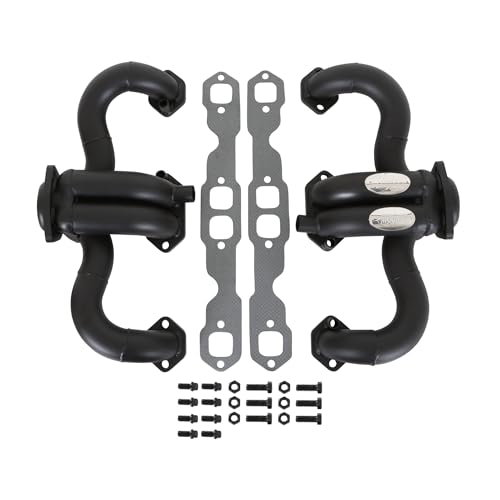


Hooker Headers Super Competition Header 6811HKR
Our Super Competition Header 6811HKR is engineered for racers who demand maximum exhaust flow and repeatable power gains. Built specifically for small-block Chevy applications, this header combines 1-7/8″ primary tubes with precision mandrel bends to eliminate restriction and keep exhaust velocity high through the entire RPM range.
We designed the 6811HKR for oval-track and drag racing where rules allow open headers or require specific collector configurations. The tight-radius bends maintain optimal gas speed while the heavy-gauge steel construction withstands the thermal cycling and vibration of competitive racing. Every flange is CNC-laser cut to ensure a leak-free seal at the head, and each tube is individually back-purged during welding to prevent internal contamination that can create turbulence.
Whether you’re building a dirt-track modified or a bracket car, the 6811HKR delivers the flow characteristics serious racers need to extract every horsepower from their combination.
Core specs for the 6811HKR
Primary Tube Design and Exhaust Flow
The 1-7/8″ primary tubes on the 6811HKR are sized to support racing engines that operate between 6,000 and 8,500 RPM, where exhaust velocity and scavenging efficiency become critical to maintaining cylinder pressure. We chose this diameter after extensive dyno testing showed it provides the best balance between peak flow and velocity retention across the powerband most small-block Chevy race engines use.
Each tube follows a carefully calculated path from the exhaust port to the collector, with bend radii designed to minimize turbulence while still clearing engine accessories and chassis components. The mandrel-bending process holds the tube’s inner diameter constant through every curve, eliminating the pinch points that rob power in crush-bent headers. This consistent cross-section keeps exhaust pulses moving at optimal speed, which improves cylinder evacuation during valve overlap and helps draw fresh mixture into the chamber on the intake stroke.
Construction and Durability Standards
We build every Super Competition header from heavy-gauge steel that resists warping under the extreme thermal cycling racing engines produce. The material thickness is calibrated to withstand repeated heat-up and cool-down cycles without fatiguing at weld joints or developing cracks along bend lines, failure points we identified through decades of feedback from circle-track and drag racers.
Welding and Flange Precision
Each primary tube is TIG-welded with full penetration at the flange and collector connections, and we back-purge the interior of every joint with inert gas during welding to prevent oxidation inside the tube. That internal contamination creates rough surfaces that disrupt laminar flow and cost horsepower. The CNC-laser cut flanges maintain tolerances within a few thousandths of an inch, so the header seats flat against the cylinder head without gasket leak paths.
Collector Configuration and System Compatibility
The 6811HKR terminates in 3″ collectors designed to mate with competition exhaust systems or run open depending on your series rules. This collector diameter works with the 1-7/8″ primaries to maintain exhaust velocity as the individual pulses merge, preventing the backpressure spike that occurs when tubes dump into an oversized collector too abruptly.
Many racers pair this header with a merge collector or X-pipe further downstream when rules require a full exhaust system. The 3″ outlet size gives you flexibility to build the rest of the system around your specific combination and class regulations. If you’re running open headers, the collector length is calibrated to tune the exhaust note and scavenging wave for optimal power at your engine’s peak torque RPM.
Other Super Comp Headers for Small-Block Chevy

Rated 4.8 by verified buyers
Common questions about the 6811HKR header
The 6811HKR is built for small-block Chevy racing engines in circle-track and drag racing applications where maximum exhaust flow is the priority. It works with most aftermarket cylinder heads and engine configurations that operate in the 6,000 to 8,500 RPM range.
The header is designed for competition use, not street-driven vehicles. Racers running modified, super stock, and bracket classes have successfully used this header with 350, 383, and 400 cubic-inch combinations.
Fitment depends on your specific chassis configuration, engine positioning, and steering setup. The 6811HKR is designed to clear most competition engine mounts and accessories, but race car builds vary significantly even within the same class.
We recommend test-fitting the header before final installation to verify clearance around frame rails, steering components, and crossmembers. Many racers need to adjust motor plate position slightly or modify steering linkage routing to achieve optimal clearance.
The 6811HKR terminates in 3-inch collectors that are sized to work with the 1-7/8 inch primary tubes for optimal exhaust velocity. This collector diameter provides flexibility to run open headers where rules allow or to connect to a full competition exhaust system.
The collector length is tuned to support scavenging characteristics at the RPM range most small-block Chevy race engines use. You can weld extensions, merge collectors, or exhaust dumps directly to the 3-inch outlet depending on your series requirements.
Retorque the flange bolts after the first heat cycle once the header has cooled to room temperature. Thermal expansion during initial use settles the gasket and can leave bolts slightly loose.
After that initial retorque, check bolt tension every three to five race sessions or anytime you notice discoloration around the flange that might indicate a developing leak. Use a torque wrench set to your cylinder head manufacturer’s specification and follow a star pattern to maintain even clamping pressure.
We strongly recommend using high-temperature competition-grade exhaust gaskets rated for racing use. Stock gaskets are designed for lower exhaust temperatures and will fail quickly under the thermal stress racing engines produce.
Competition gaskets made from multi-layer steel or reinforced composite materials provide better sealing and durability. They resist blowout at high cylinder pressures and maintain their seal through repeated heat cycling that would destroy standard gaskets.
The 6811HKR features 1-7/8 inch diameter primary tubes that are mandrel-bent to maintain consistent inner diameter through every curve. This tube size is optimized for racing engines that operate between 6,000 and 8,500 RPM, where it provides the best balance between peak flow and exhaust velocity.
The mandrel-bending process eliminates the pinch points that occur in crush-bent headers, keeping exhaust pulses moving at optimal speed for improved cylinder scavenging and power output across the upper powerband.
Apply anti-seize compound to the threads of all header bolts before installation. This prevents the bolts from galling into the aluminum cylinder heads, which makes future removal difficult and can damage threads.
Use a torque wrench and tighten bolts in a star pattern to the head manufacturer’s specification. Avoid over-torquing, which can strip threads or warp the header flange. The combination of proper torque and anti-seize ensures you can remove the header later without thread damage.