

RacingHeart Street Stock Headers | Hook Performance Exhaust
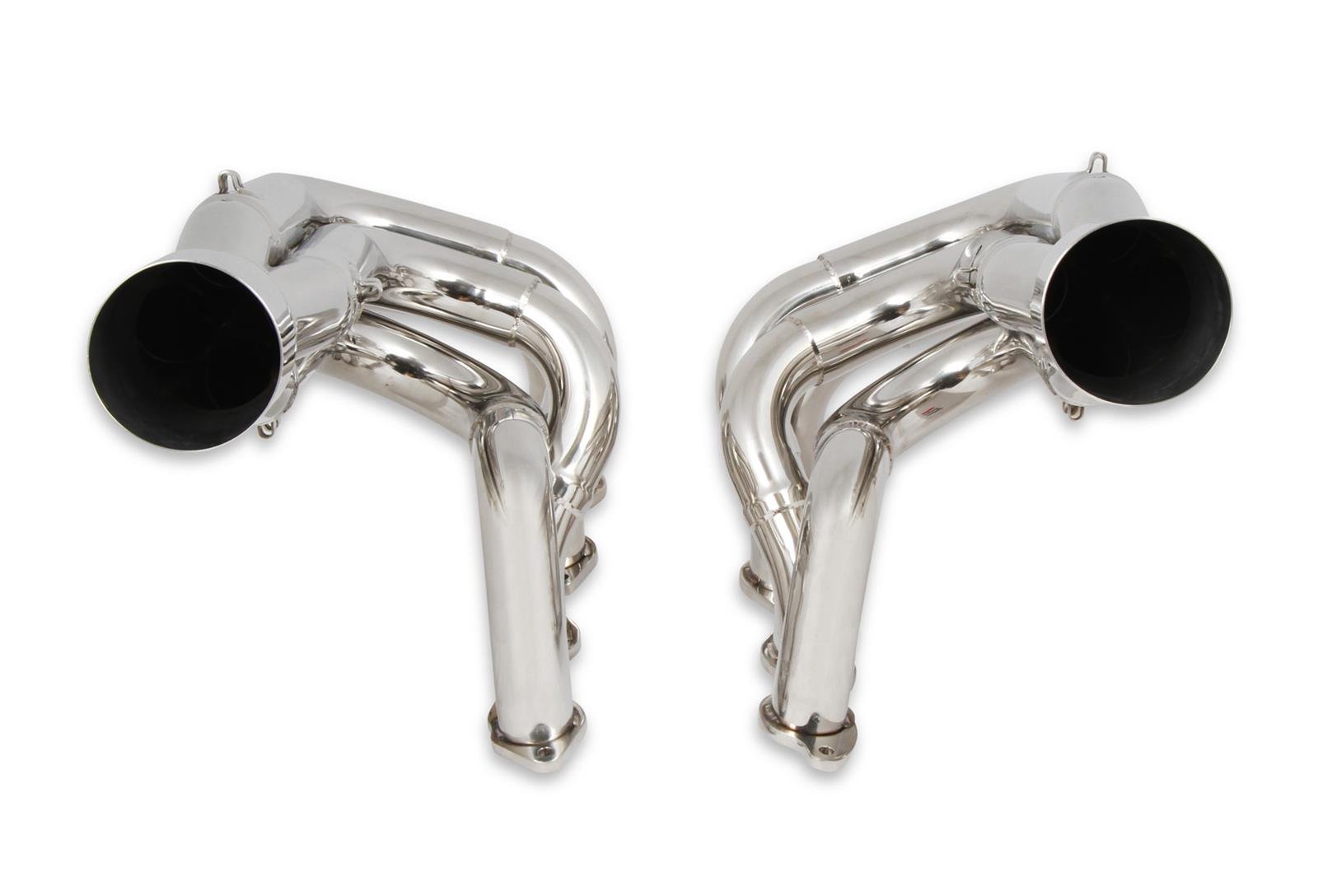
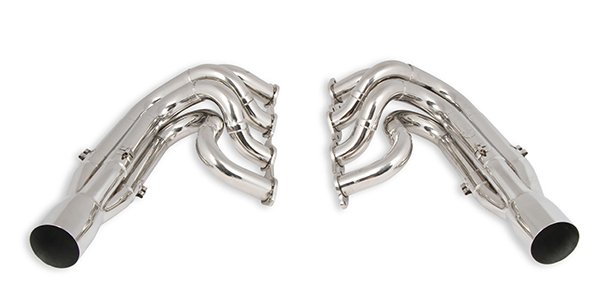
Our RacingHeart Street Stock Headers transform your classic muscle car or street rod into a genuine performance machine without sacrificing daily drivability. We engineered these headers with mandrel-bent primary tubes and CNC-machined flanges to maximize exhaust flow while maintaining emissions compliance in most states.
Every set ships with reinforced collector flanges that eliminate the cracking issues common in cheaper aftermarket units. The swept primary design clears most factory steering components and engine mounts, so installation typically wraps up in a weekend with basic hand tools and jack stands.
Core specs & fitment details
Materials & Construction Quality
We spec 16-gauge 409 stainless steel for the primary tubes and collectors because it offers the best balance of thermal expansion resistance and weld integrity at this price point. The material won’t flake or rust like mild-steel headers do after a single winter, and it tolerates the repeated heat cycles of stop-and-go driving without stress cracks forming at the welds.
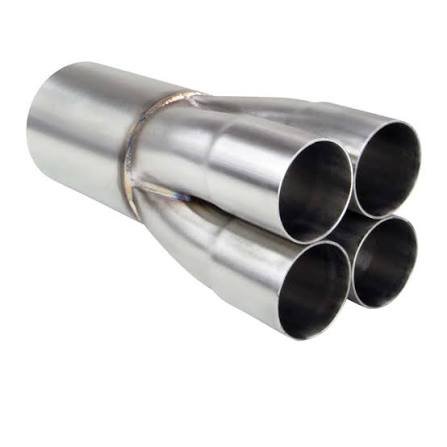
Every flange is CNC-machined from ⅜” steel plate to prevent warping during installation or after thousands of heat cycles. We TIG-weld the primaries to the flanges in a nitrogen-purged fixture, which eliminates the internal oxidation that leads to premature tube failure. The collectors use a true merge-cone design rather than the straight-cut stubs you find on budget headers, so exhaust pulses scavenge cleanly and you actually see the advertised torque gains on the dyno.
Fitment & Installation Notes
Clearance & Compatibility
Our engineering team test-fits every application on factory-spec chassis jigs before releasing a part number. The RacingHeart Street Stock Headers clear most power steering boxes, factory air conditioning lines, and stock motor mounts without modifications. A few F-Body applications require minor dimpling of the floor pan for driver-side collector clearance — the instruction sheet flags those cases and provides exact measurements.
Tools & Time Required
Plan on four to six hours for a complete install if you’re working alone with basic hand tools. You’ll need a quality set of metric and SAE wrenches, jack stands rated for your vehicle’s weight, and a pipe cutter if you’re trimming the exhaust system behind the collectors. We include new header bolts and collector gaskets with every set, but you should grab a tube of high-temp RTV sealant and some anti-seize compound before you start.
Performance Gains & Tuning Considerations
Dyno testing on a stock 350 small-block showed consistent gains of 18-22 horsepower at the wheels with no other changes, and peak torque moved 300 RPM lower in the powerband. The swept primary design and merge collectors reduce backpressure by roughly 40% compared to factory cast-iron manifolds, which translates to crisper throttle response and smoother power delivery through the mid-range.
If you’re running a stock ECU, the pre-installed oxygen sensor bungs let you retain closed-loop fueling without throwing check-engine codes. Forced-induction builds and engines with aggressive camshafts may benefit from a custom tune to take full advantage of the improved exhaust flow — our tech support team can recommend tuners familiar with RacingHeart header installations if you need a referral.
High-Performance Headers for Classic & Modern Muscle


Rated 4.8 by verified buyers
Common Questions About RacingHeart Street Stock Headers
Fitment with aftermarket mounts depends on the specific brand and how much they shift the engine position. Most polyurethane replacement mounts use the same dimensions as factory mounts and won't cause clearance issues. Solid mounts or adjustable mounts that relocate the engine forward or to one side may require minor modifications.
We recommend calling our tech line with your mount brand and part number before ordering. Our team keeps notes on known conflicts and can often suggest which way to shift the engine or whether a different header design would be a better match for your setup.
Most street engines with stock camshafts and compression ratios will run fine with no tuning changes after installing these headers. The pre-installed oxygen sensor bungs let your factory ECU maintain closed-loop fueling just like it did with the stock manifolds.
If you're running a performance camshaft with more than 220 degrees of duration at 0.050" lift, a stroker motor, or any kind of forced induction, a custom tune will help you extract maximum power from the improved exhaust flow. The headers themselves don't require tuning, but the combination of parts might benefit from recalibrated air-fuel ratios and ignition timing.
You'll notice a deeper tone and slightly more volume at idle and under acceleration, but the headers themselves don't make the exhaust dramatically louder. Most of your exhaust note is determined by the mufflers and resonators downstream of the collectors.
If you're keeping your stock exhaust system behind the headers, expect the sound to be 10-15% louder with a richer, more aggressive tone. If you're also upgrading to a free-flowing cat-back system or running open collectors, the volume increase will be more significant.
Yes, most applications install without lifting or tilting the engine. The swept primary tube design routes around factory steering components and motor mounts so you can work from underneath the car with the engine in its stock position.
A few tight applications like third-gen F-Bodies benefit from loosening one motor mount and jacking the engine up about half an inch while you slide the driver-side header into place. The installation guide flags those cases and provides step-by-step instructions for the jack-and-block method.
Raw stainless steel headers will develop a golden or bronze patina over time as the surface oxidizes from heat exposure. This doesn't affect performance or durability — it's purely cosmetic. Raw headers are the most affordable option and work great if the headers aren't visible or if you plan to wrap them with header tape.
Ceramic coating adds a thermal barrier layer that reduces radiant heat by 200-300°F, which protects nearby components and keeps your engine bay cooler. The coating also locks in a consistent finish that won't discolor over time. Silver ceramic has a polished metallic look, while jet-black ceramic is popular for show cars and builds where the headers are visible.
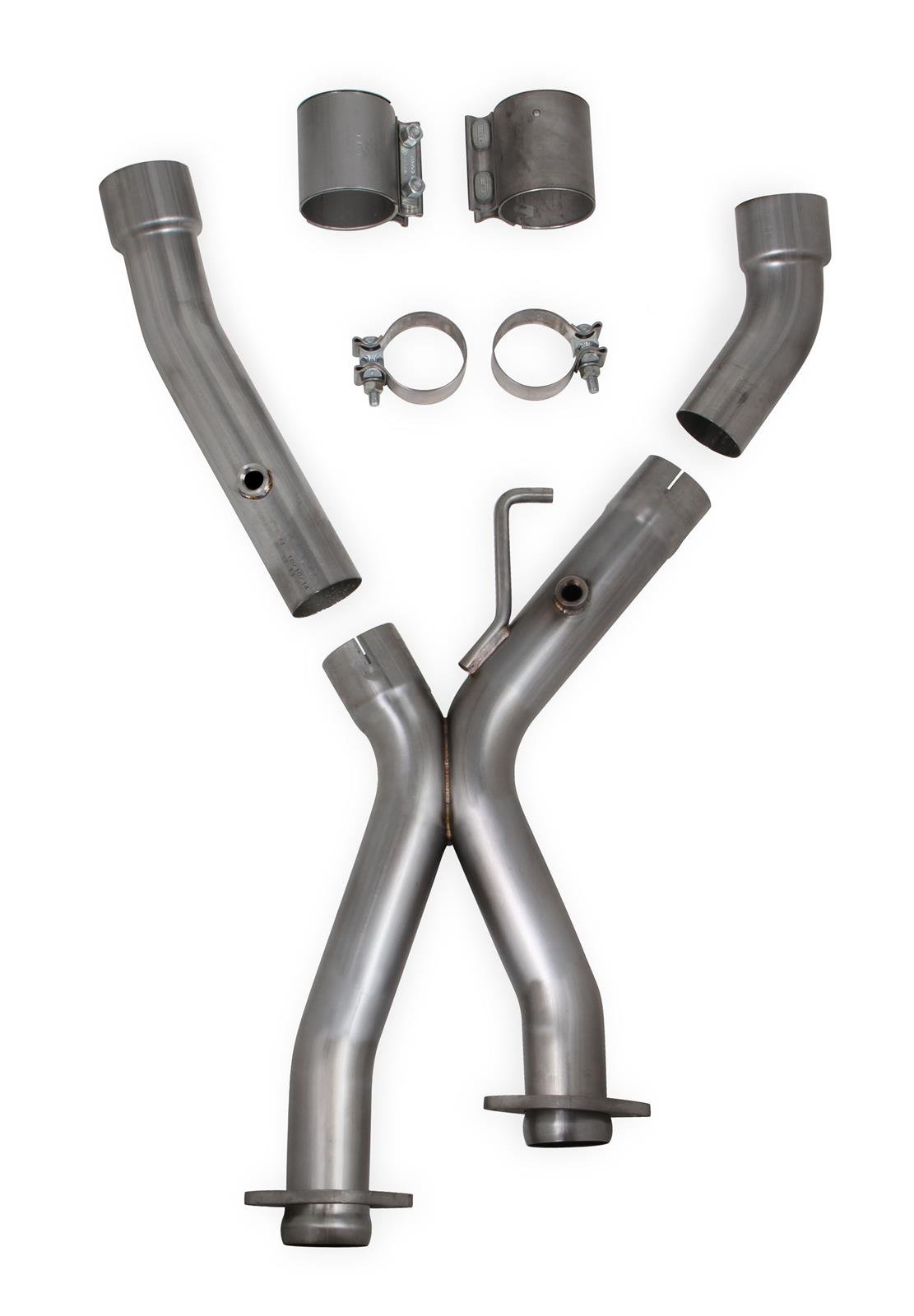
Yes, the RacingHeart Street Stock Headers include 3" slip-fit collectors that mate to most aftermarket and factory catalytic converter inlet pipes. You may need to trim your existing exhaust pipe behind the collectors to adjust the length, or you can order a complete cat-back system designed to work with these headers.
The oxygen sensor bungs are positioned to accommodate both pre-cat and post-cat sensors depending on your vehicle's emissions configuration. If you're in a state with strict emissions testing, verify that your inspector will pass headers with high-flow catalytic converters before making changes to your exhaust system.
Primary tube diameter should match your engine's displacement and RPM range. For stock or mildly built small-blocks up to 350 cubic inches that spend most of their time below 5500 RPM, the 1⅝" primaries provide better low-end and mid-range torque with minimal sacrifice at the top end.
Engines over 383 cubic inches, stroker motors, or builds with aggressive camshafts that operate above 6000 RPM regularly will benefit from the 1¾" primaries. The larger tubes reduce backpressure at high RPM but may give up a small amount of torque below 3000 RPM. If you're between sizes, call our tech team — they can recommend the best fit based on your specific combination.