
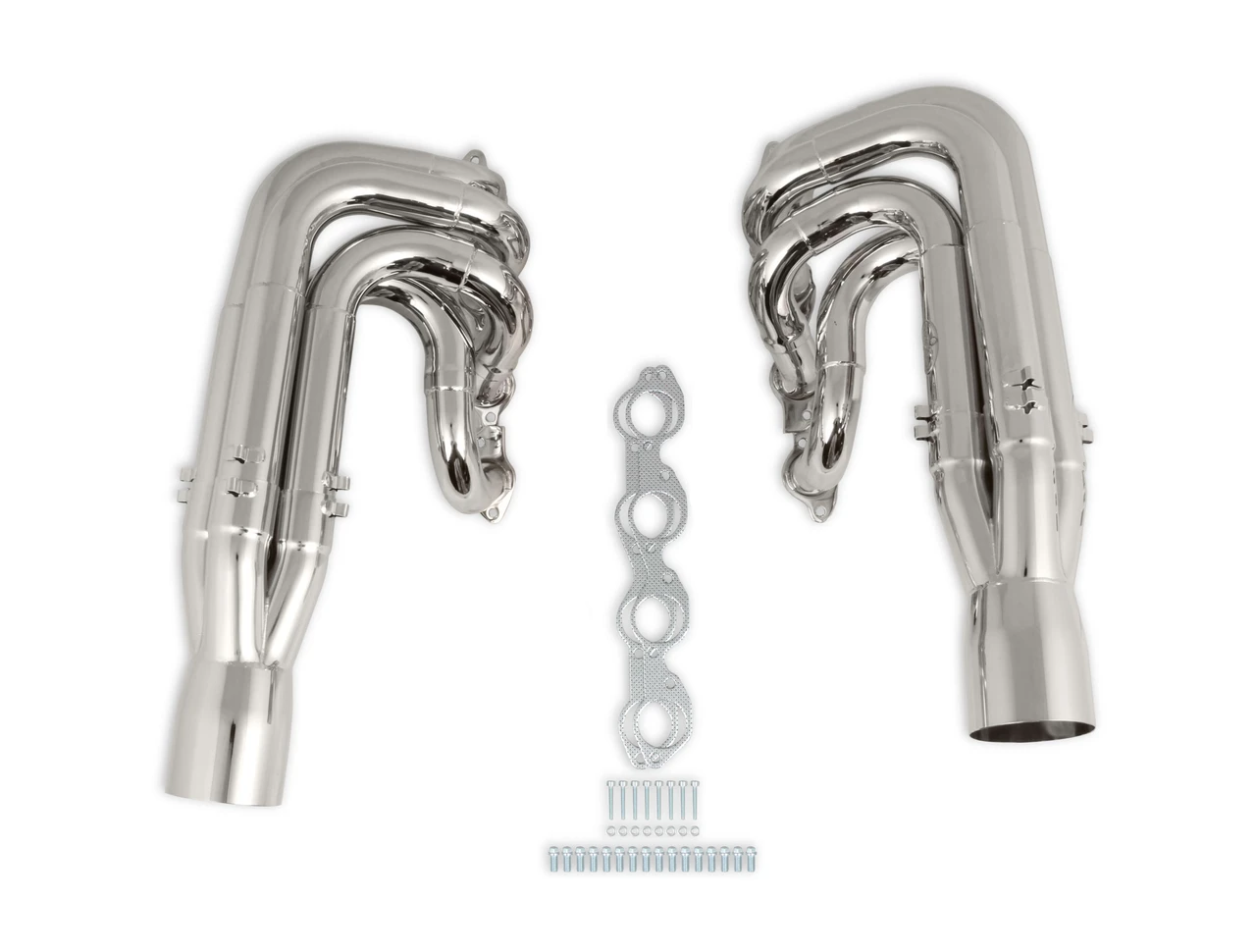
RacingHeart 3-Step Dragster Headers – Hook Competition Headers
Our RacingHeart 3-Step Dragster Headers represent the pinnacle of drag racing exhaust engineering. The three-stage stepped primary tubes progressively increase diameter from collector to port, accelerating exhaust gas velocity exactly when your engine needs it most.
Every weld, flange, and bend is built to survive repeated full-throttle launches and back-to-back passes. We designed these headers for racers who demand measurable gains in both horsepower and ET consistency, lap after lap.
Race-proven specifications
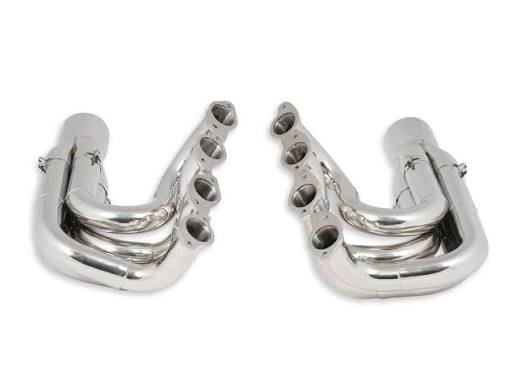
Three-stage stepped primary design
The defining feature of the Hooker RacingHeart 3-step dragster headers is the carefully calculated diameter progression in each primary tube. We start at 1.625 inches at the exhaust port, step to 1.750 inches mid-tube, and finish at 1.875 inches before the merge collector.
This stepped geometry does two things simultaneously: it maintains exhaust gas velocity during the critical early scavenging phase, and it provides the volume expansion needed to handle peak flow as RPM climbs past 7000. The result is a flatter torque curve and stronger mid-range pull compared to constant-diameter primaries.
Materials and fabrication
We fabricate every RacingHeart header from 304 stainless steel tubing with a minimum wall thickness of 0.065 inches. This material resists oxidation, maintains structural integrity under thermal cycling, and survives the corrosive byproducts of high-octane race fuel.
All welds are full-penetration TIG beads laid by certified welders. We do not use MIG spot welds or tack-and-fill methods anywhere in the assembly. The CNC-machined flanges are laser-cut from 3/8-inch stainless plate to eliminate warping when bolts are torqued to spec.
Fitment and installation notes
The RacingHeart 3-Step headers are designed for tube-chassis drag cars and purpose-built race engines. They are not intended for street-driven vehicles or applications requiring catalytic converters.
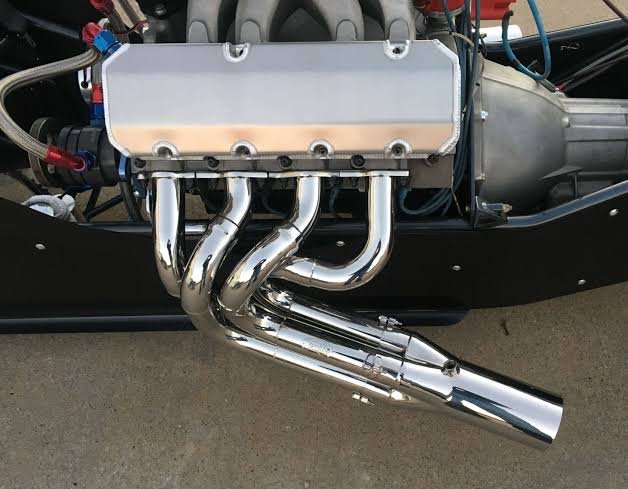
Flange bolt patterns are compatible with most aftermarket aluminum cylinder heads used in small-block V8 drag racing. You will need to verify header-to-chassis clearance in your specific application, particularly around steering components and front crossmembers in cars with modified suspension geometry.
Build your complete Hook exhaust system


Rated 4.8 by verified buyers
Common questions about RacingHeart 3-Step headers
The three-step progression in the primary tubes maintains exhaust velocity during the early scavenging phase while providing the volume expansion needed at high RPM. This results in a broader, flatter torque curve and improved throttle response compared to constant-diameter primaries.
Equal-length headers optimize for one specific RPM range. The stepped design in the Hooker RacingHeart headers delivers stronger performance across a wider powerband, which translates to better ET consistency and more forgiving tuning windows.
These headers are designed for aftermarket aluminum cylinder heads commonly used in drag racing applications. Factory cast-iron heads may have different port spacing and bolt-hole patterns that will not align with our flanges.
If you are running a stock engine block with performance heads, verify the flange bolt pattern matches your specific head casting before ordering. Most Dart, Brodix, and AFR small-block heads are compatible.
No. The RacingHeart 3-Step Dragster Headers are designed exclusively for competition use on dedicated race vehicles. They are not emissions-legal for street-driven cars and do not include provisions for catalytic converters or oxygen sensors.
If you need headers for a street-legal build, consider our RacingHeart Street Stock headers, which meet IMCA tech requirements and can accommodate emissions equipment where required by local regulations.
The collector outlets are sized for 3.5-inch slip-fit exhaust components. We recommend maintaining that diameter through at least the first twelve inches of exhaust tubing to preserve scavenging efficiency.
You can step down to 3-inch pipe further downstream if ground clearance is an issue, but reducing diameter immediately after the collectors will cost you horsepower. Most drag cars run 3.5-inch all the way to open dumps or race mufflers.
Retorque all flange bolts after the first three passes, then recheck every ten runs or at the start of each race day. Use a torque wrench and follow the tightening sequence recommended by your cylinder head manufacturer.
Thermal cycling causes expansion and contraction that can loosen bolts over time. Checking torque regularly prevents exhaust leaks and protects both the headers and the head gasket from damage.
Yes, but you must verify clearance between the header primaries and your specific dry-sump oil pan and pickup assembly. Tube-chassis cars with relocated engine mounts may require minor adjustments to header placement.
We recommend doing a test fit with the oil pan installed before final welding of motor mounts or exhaust hangers. Clearance requirements vary depending on pan depth and pickup orientation.
Use high-temperature header gaskets rated to at least 2000 degrees Fahrenheit. Standard composite gaskets will fail under the sustained heat and cylinder pressure of a race engine.
We also recommend ARP stainless header bolts with anti-seize compound on the threads. Do not reuse old gaskets or hardware – fresh gaskets and proper torque are critical to preventing exhaust leaks between rounds.